
Monopolar vs Bipolar Electrosurgical Units (ESU): Operating Room Selection Guide
Authoritative biomedical comparison of Monopolar vs Bipolar Electrosurgical Units (ESU / Diathermy): RF waveforms (300–500 kHz), REM return electrode safety (IEC 60601-2-2), and vessel sealing.
ZeruvMed Clinical Procurement Desk · Operating Room Energy Devices & Electrosurgical Safety Team
IEC 60601-2-2 · AORN Electrosurgical Safety · ISO 13485 Advisory · Published 2026-03-05 · Reviewed & Updated 2026-10-15
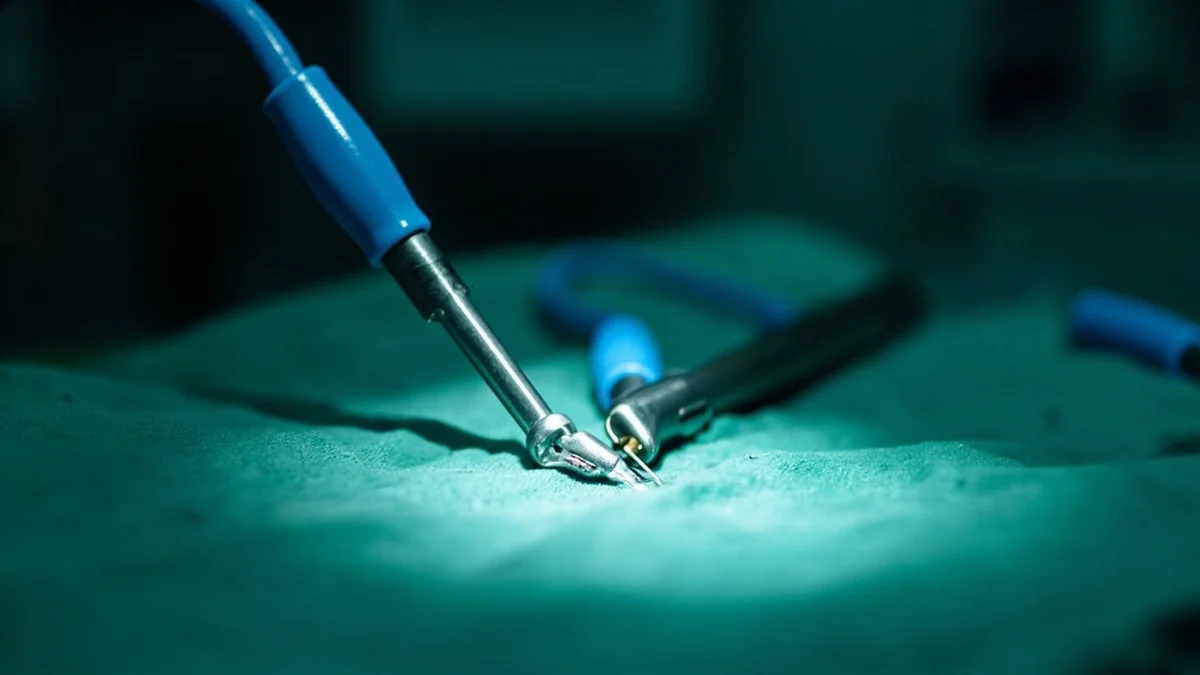
Executive Summary · Procurement Brief
Key Clinical & Commercial Takeaways
- 1True Electrosurgery (ESU / Diathermy) passes alternating Radiofrequency (RF) current at 300 kHz to 500 kHz through human tissue so intracellular water molecules oscillate and generate thermal vaporization (Pure Cut at 100°C) or protein denaturation (Coagulation at 60°C–95°C)—wholly distinct from simple DC heated-wire thermal cautery.
- 2In Monopolar electrosurgery, current travels from the active pencil tip through the patient's body to a large dispersive Return Electrode (patient grounding pad), delivering versatile cutting, blend, and spray fulguration across large surgical fields.
- 3In Bipolar electrosurgery, the active and return electrodes are the two insulated tines of a single forceps: current traverses only the 1–3 mm of tissue grasped between the tips, eliminating the patient grounding pad, reducing lateral thermal spread (<1 mm), and protecting patients with cardiac pacemakers or delicate neurovascular structures.
- 4Under IEC 60601-2-2, modern operating room ESUs must incorporate isolated RF output circuits and split-pad Return Electrode Monitoring (REM / CQM) that instantly cuts generator output if pad-to-skin contact impedance drifts outside 5–135 ohms.
Side-by-Side Specification Matrix
Biomedical & Surgical Comparison: Monopolar ESU Mode vs Bipolar ESU Mode vs Advanced Bipolar Vessel Sealing
| Engineering / Clinical Parameter | Monopolar Electrosurgery | Standard Bipolar Electrosurgery | Advanced Bipolar Vessel Sealing (LigaSure-Class) |
|---|---|---|---|
| Electrical Current Pathway | Generator → Active Pencil → Patient Body → Dispersive Return Pad → Generator | Generator → Active Forceps Tine → Grasped Tissue (1–3 mm) → Return Forceps Tine | Closed-loop impedance-sensing generator → Bipolar jaw clamp → Return jaw |
| Patient Return Pad (REM Pad) Required? | Yes — mandatory split-foil adhesive dispersive pad with REM/CQM monitoring | No — return electrode is integrated into the opposing forceps tip | No — strictly localized between the compressing instrument jaws |
| Supported Waveform Modes | Pure Cut, Blend 1/2/3, Desiccation (Pinpoint Coag), Fulguration (Spray Coag) | Micro/Macro Bipolar Coagulation (and specialized Bipolar Cut on select ESUs) | Automated multi-pulse collagen/elastin fusion cycle with audible completion tone |
| Typical Peak Voltage & Power Output | 200W–400W max · up to 3,000V–4,500V peak-to-peak in Spray Coag mode | 50W–120W max · low voltage (150V–400V peak) prevents sparking/arcing | 150W–300W high-current, ultra-low-voltage (<190V) tissue-impedance feedback |
| Lateral Thermal Spread Zone | 2.0 mm to 6.0 mm (depending on power, dwell time, and Blend vs Spray mode) | 0.5 mm to 1.5 mm (safe adjacent to cranial nerves, ureters, and bowel) | 1.0 mm to 2.0 mm; permanently fuses vessels up to 7 mm diameter (3× systolic BP) |
| Performance in Wet / Submerged Fields | Poor — current disperses rapidly in pooled saline or heavy blood | Excellent — coagulates reliably under continuous saline irrigation | Excellent — mechanical jaw compression expels fluid prior to RF energy delivery |
| Pacemaker / ICD Electromagnetic Risk | Moderate-to-High (current path near chest can trigger EMI oversensing/reset) | Minimal (preferred modality for pacemaker/ICD and pediatric patients) | Minimal (no torso current path; safe for implanted cardiac devices) |
1. Physics of High-Frequency RF Electrosurgery: Why 300–500 kHz Does Not Cause Ventricular Fibrillation
Clinicians often use the terms "electrocautery" and "electrosurgery" interchangeably, yet they represent fundamentally different physical mechanisms. True electrocautery uses direct current (DC) to heat a metallic resistance wire tip (like a soldering iron); no electrical current enters the patient's body, and tissue is seared purely by passive thermal conduction. In contrast, an Electrosurgical Unit (ESU / surgical diathermy) is a high-frequency radio-wave generator operating between 300 kHz and 500 kHz—hundreds of times higher than 50/60 Hz household mains electricity.
Why is the 300–500 kHz frequency band critical? Neuromuscular depolarization (the pain, tetanic muscle contraction, and lethal ventricular fibrillation caused by 50 Hz electrocution) ceases above 100 kHz because cell membrane sodium/potassium ion channels cannot switch polarity fast enough to follow the alternating field. At 400 kHz, electrical energy passes harmlessly across excitable nerve and myocardial membranes while driving intense kinetic oscillation of intracellular polar ions at the high-current-density tip of the surgical electrode.
Operating room teams pairing high-frequency surgical equipment with antistatic, breathable clinical workwear can explore ZeruvMed's surgical scrubs and lab coats across /collections, /categories, and /products.
Cut vs Coag Waveform Physics (Duty Cycle & Voltage)
Pure Cut uses a continuous (100% duty cycle), low-voltage sinusoidal waveform that heats intracellular water past 100°C in microseconds, exploding cells into steam so the electrode glides on a vapor envelope with minimal char. Spray Coagulation uses an interrupted (6% on / 94% off duty cycle), high-voltage (3,000–4,500V) damped wave that arcs across air to dehydrate and coagulate superficial capillary beds without deep cutting.
2. Monopolar Electrosurgery: Clinical Versatility & REM Pad Burn Prevention
Monopolar electrosurgery remains the workhorse of general, orthopedic, gynecological, and dermatological surgery because a single hand-switched or foot-switched pencil can vaporize skin/fascia (Pure Cut), divide vascular fat with simultaneous hemostasis (Blend 1/2/3 at 50%–80% duty cycle), desiccate clamped vessels (Pinpoint Coag), or fulgurate oozing raw beds (Spray Coag). Because the active pencil tip has a tiny surface area (~1–2 mm²), current density is concentrated enough to vaporize tissue instantly.
After doing its work at the surgical site, that same current must exit the patient through a large dispersive Return Electrode (grounding pad, ~100–150 cm² surface area) where current density drops so low that skin temperature rises by less than 1°C–2°C. Historically, if a single-foil grounding pad partially peeled off the patient's thigh during surgery, the entire 200W current concentrated onto the remaining attached corner—causing severe third-degree return-electrode burns.
To eliminate pad burns, IEC 60601-2-2 mandates two engineering safeguards that hospital buyers must verify on every ESU quotation: an Isolated (Floating) RF Output Circuit (so current cannot seek alternate ground paths through ECG leads or metal operating table stirrups) and a Contact Quality Monitor (CQM / REM) that passes a tiny interrogation current between the two halves of a split-foil return pad, halting generator activation within milliseconds if contact impedance rises above 135 ohms or shifts by more than 40%.
3. Bipolar Electrosurgery: Microsurgical Precision & Pacemaker Safety
In Bipolar mode, the dispersive patient grounding pad is eliminated. Both the active and return electrodes are integrated into the two opposing insulated prongs of a bayonet, Cushing, or Jeweler bipolar forceps. High-frequency current travels exclusively through the 1 mm to 3 mm bridge of tissue grasped between the non-stick silver-alloy or titanium forceps tips.
Because the electrical path is microscopic, Bipolar electrosurgery operates at 70% to 85% lower peak voltage than Monopolar coagulation, reducing lateral thermal spread to roughly 0.5–1.5 mm. Furthermore, Bipolar forceps function reliably in wet surgical fields (such as under continuous saline drip during neurosurgery or ophthalmic surgery) where Monopolar current would dissipate harmlessly into the surrounding fluid.
- Mandatory Bipolar Indications: Cranial & spinal neurosurgery, microvascular anastomosis, ophthalmic/oculoplastic surgery, ENT thyroid/parathyroid dissection near the recurrent laryngeal nerve, and circumcision or digital (finger/toe) surgery where monopolar current channeling causes ischemic necrosis.
- Cardiac Pacemaker & ICD Patients: Because bipolar current never traverses the thorax, it eliminates electromagnetic interference (EMI) that can inhibit pacemaker pacing, trigger inappropriate ICD shocks, or damage myocardial lead tips.
4. Sizing ESU Power Output: 50W–100W Outpatient vs 300W–400W Hospital OR
Procurement officers should size ESU wattage and tissue-impedance feedback speed to the clinical department rather than overpaying for a 400W hospital console in an outpatient dermatology suite:
- Tier 1: 30W – 80W High-Frequency Hyfrecator / Minor Clinic Cautery (PKR 65,000 – 160,000): Compact tabletop/wall units operating at 400 kHz – 2.0 MHz (radiosurgery) for dermatology wart/nevus ablation, dental gingivectomy, cervical LEEP, and outpatient clinic hemostasis.
- Tier 2: 150W – 200W Outpatient Surgery & Endoscopy ESU (PKR 240,000 – 480,000): Full Monopolar (Cut, Blend, Pinpoint/Spray Coag) + Bipolar generator with REM split-pad safety and Endo-Cut fractionated pulse mode for GI polypectomy and day-case plastic/ENT surgery.
- Tier 3: 300W – 400W Hospital Operating Theater Console + Vessel Sealer (PKR 650,000 – 1,850,000): Dual simultaneous monopolar outputs, autonomous tissue-impedance microprocessor feedback (sampling 3,000+ times/sec), Bipolar saline TURP/TCRE resection support, and integrated 7 mm vessel-sealing socket.
5. Laparoscopic Electrosurgery Hazards: Insulation Failure & Capacitive Coupling
In minimally invasive laparoscopic surgery, 85% of the length of the monopolar L-hook or Maryland dissector sits outside the 50-degree field of view of the laparoscope camera. If a microscopic pinhole develops in the black PTFE/polyimide insulation shaft of a reusable laparoscopic instrument, 100% of the monopolar current arcs invisibly into adjacent small bowel or iliac vessels—causing delayed perforation peritonitis 3 to 5 days post-operatively.
Similarly, Capacitive Coupling occurs when an intact insulated monopolar shaft is passed through a hybrid metal/plastic trocar cannula, turning the metal cannula into a charged capacitor that discharges into the abdominal wall or bowel. CSSDs reprocessing laparoscopic monopolar instruments must test shaft insulation with a high-voltage porosity detector prior to every Class B autoclave cycle, and OR teams should use all-plastic or all-metal conductive trocars (never hybrid combinations).
6. Surgical Smoke Plume Evacuation (ISO 16571) & OR Team Protection
Vaporizing 1 gram of tissue with an electrosurgical pencil generates a surgical smoke plume containing benzene, formaldehyde, acrolein, hydrogen cyanide, carbon monoxide, and viable viral particles (including HPV DNA during condyloma ablation)—mutagenically equivalent to the unfiltered smoke of 6 cigarettes. Under AORN and ISO 16571 standards, operating rooms should attach a pencil-integrated smoke evacuation tube connected to a ULPA (0.1 µm at 99.999% efficiency) + activated charcoal vacuum evacuator positioned within 2 cm of the eschar site.
Complete your operating room safety protocol by outfitting surgical and nursing personnel with precision-engineered clinical workwear: browse our scrub collections in /collections, explore /categories and /products (such as the Forest Green Scrub Set and Zeruvmed Signature V-Neck Scrub Set), and place institutional orders at /checkout.
Finally, biomedical engineering departments must execute semi-annual IEC 60601-2-2 preventive maintenance on every Electrosurgical Unit using a calibrated RF electrosurgical analyzer—verifying output wattage curves across 100 to 500 ohm load resistances, testing high-frequency leakage current (<150 mA), and confirming that the REM return-electrode alarm trips reliably when simulated pad resistance exceeds 135 ohms.
Pairing every monopolar and bipolar ESU workstation with conductive-safe trocar cannulas, verified split-pad REM grounding electrodes, and inline ULPA surgical smoke evacuation protects both the surgical patient and the operating theater team across every procedure.
Integrating these electrosurgical safety protocols into your operating room nursing checklist eliminates return-electrode thermal injuries and laparoscopic stray-current complications while maximizing surgical hemostasis efficiency.
Direct Storefront Integration
Recommended Clinical Workwear & Institutional Ordering
Standardize staff barrier protection and clinical uniforms alongside your biomedical equipment procurement.
Browse Operating Room Collections
Shop surgical scrub sets and clinical lab coats designed for operating theater staff.
Clinical Apparel Categories
View Women, Men, Lab Coats, and Premium designer clinical apparel.
All Clinical Products
Compare all 21 clinical scrub and barrier coat designs.
Forest Green Scrub Set (Men)
Classic surgical theater green scrub set reducing visual afterimage under OR lights.
Proceed to Clinic Checkout
Fast hospital and clinic checkout with card, bank transfer, or cash on delivery.
Clinical Audit & Purchasing Q&A
Frequently Asked Questions
Where should the monopolar dispersive return pad (grounding pad) be placed on the patient?
Place the split-foil REM dispersive pad over a well-vascularized, convex muscular mass (such as the anterior/lateral thigh, calf, or upper arm) as close to the operative site as practical, on clean, dry, hairless skin. Never place a return pad over bony prominences, scar tissue, metal orthopedic prostheses, adipose folds, tattoos, or across the thorax from a cardiac pacemaker.
Why does monopolar cautery stop working when the surgical field is filled with blood or saline?
Both blood and 0.9% normal saline are highly conductive electrolyte solutions. When a monopolar pencil tip is submerged in pooled blood or saline, the RF electrical current disperses across the entire fluid pool instead of concentrating at the tip-to-tissue interface, dropping current density below the coagulation threshold. Suction the field dry first, or switch to Bipolar forceps.
What is the difference between Desiccation (Pinpoint Coag) and Fulguration (Spray Coag)?
Desiccation (Pinpoint/Soft Coag) is a contact technique where the electrode touches the tissue directly at lower voltage, gently heating cells to 65°C–90°C to weld vessel walls with minimal smoke or deep necrosis. Fulguration (Spray Coag) is a non-contact technique using high voltage (3,000–4,500V) to throw sparks across a 1–2 mm air gap, coagulating wide oozing capillary beds (like liver parenchyma or sternotomy bone marrow).
How do you prevent operating room surgical fires when using an Electrosurgical Unit?
Over 70% of operating room fires involve the "Fire Triangle" of an ESU spark (ignition source), alcohol-based skin prep (chlorhexidine-alcohol or povidone-alcohol fuel), and open oxygen delivery around the head/neck (oxidizer). Always allow alcohol skin prep a full 3 minutes to evaporate completely (preventing pooling in the umbilicus or surgical drapes) before activating the ESU.
What is an Advanced Bipolar Vessel Sealer compared to a standard bipolar forceps?
While standard bipolar forceps rely on visual judgment to coagulate small 1–2 mm vessels, Advanced Bipolar Vessel Sealing systems (such as LigaSure-class or EnSeal-class devices) combine high mechanical jaw compression with closed-loop microprocessor impedance sensing to denature and fuse arterial/venous wall collagen and elastin into a translucent seal capable of permanently occluding vessels up to 7 mm in diameter.
Continue Reading
Related Clinical Procurement Guides
Disposable vs Reusable Surgical Instruments
Analyze the 5-year Total Cost of Ownership (TCO), CSSD reprocessing labor, surgical site infection (SSI) risk, and hybrid kit strategies for disposable vs reusable surgical instruments.
Surgical Sutures & Needle Types Reference
Clinical reference to USP/EP surgical sutures (Polyglactin 910, PGA, Poliglecaprone 25, PDS, Nylon, Polypropylene, Silk), tensile strength retention curves, and 3/8 vs 1/2 circle needle points.
Multiparameter Patient Monitors Buying Guide
Compare 3-parameter vital signs spot-check monitors, 5-parameter bedside ICU monitors, and modular OR anesthesia monitors across 5-lead ECG, motion-tolerant SpO2, IBP, and EtCO2 capnography.