
Multiparameter Patient Monitors & Vital Signs Equipment: Hospital & Clinic Buying Guide
Compare 3-parameter vital signs spot-check monitors, 5-parameter bedside ICU monitors, and modular OR anesthesia monitors across 5-lead ECG, motion-tolerant SpO2, IBP, and EtCO2 capnography.
ZeruvMed Clinical Procurement Desk · Critical Care Biomedical Engineering & Telemetry Team
IEC 60601-1 · ISO 80601-2-61 (SpO2) · ISO 80601-2-55 (Capnography) · Published 2026-02-26 · Reviewed & Updated 2026-10-15
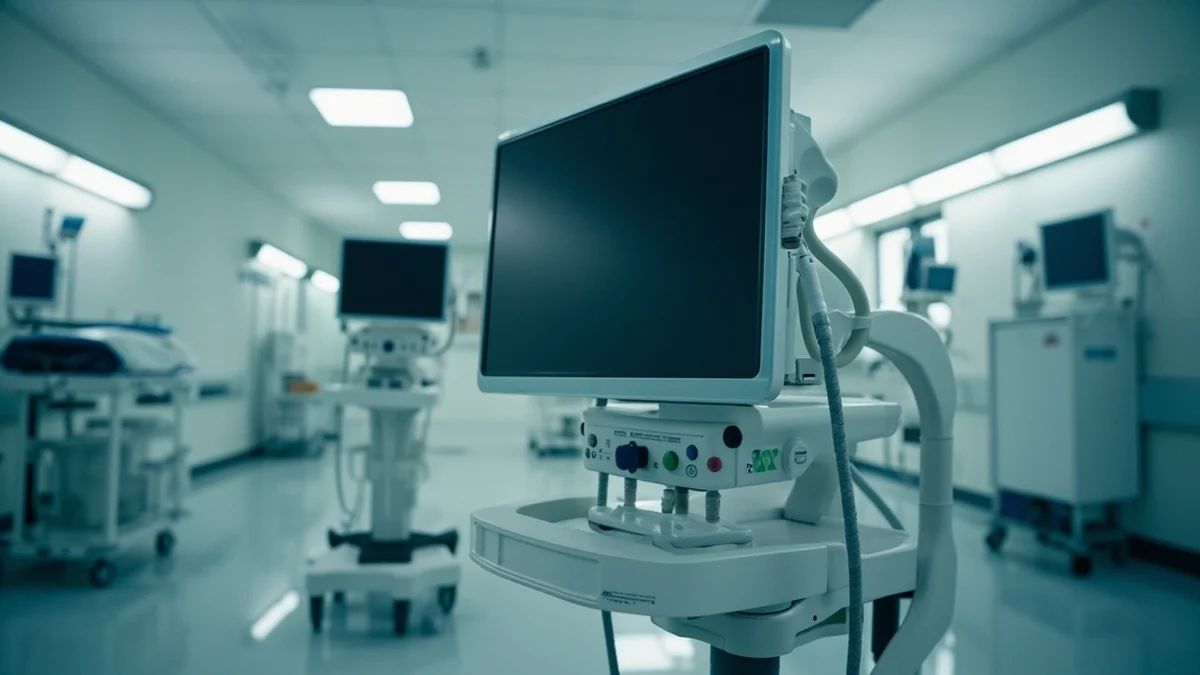
Executive Summary · Procurement Brief
Key Clinical & Commercial Takeaways
- 1Match monitor architecture to acuity: 3-parameter Spot-Check Monitors (NIBP, SpO2, Temp) serve outpatient triage and general wards; 5-parameter Pre-Configured Monitors (3/5-lead ECG, Resp, SpO2, NIBP, Dual Temp) serve ER, recovery (PACU), and HDU; Hot-Swappable Modular Monitors with IBP, EtCO2, and anesthetic gas modules serve ICUs and operating theaters.
- 2During conscious sedation, endoscopy, and post-operative opioid analgesia, End-Tidal CO2 (EtCO2 capnography) detects hypoventilation and apnea 60 to 120 seconds before arterial oxygen desaturation appears on pulse oximetry (SpO2).
- 3Specify motion-tolerant and low-perfusion DSP pulse oximetry algorithms (validated down to 0.05% Perfusion Index) to eliminate up to 75% of nuisance false alarms in shivering, pediatric, or hypotensive patients.
- 4Ensure defibrillation protection (5,000V / 360J recovery within <5 seconds) and ESU electrosurgical high-frequency notch filtering on all ECG front-end amplifiers used in operating rooms and emergency resuscitation bays.
Side-by-Side Specification Matrix
Clinical Acuity & Technical Comparison: Spot-Check Vital Signs vs 5-Parameter Bedside vs Modular ICU/OR Patient Monitors
| Specification / Feature | Tier 1: Vital Signs Spot-Check Monitor | Tier 2: 5-Parameter Compact Bedside Monitor | Tier 3: Modular ICU / Operating Room Monitor |
|---|---|---|---|
| Primary Clinical Care Area | OPD Triage, General Medical/Surgical Wards, Dialysis Chairs | Emergency Dept (ER), HDU, Post-Anesthesia Care (PACU), Minor OR | Adult/Neonatal ICU, Cardiac CCU, Major Operating Theaters |
| Standard Monitored Parameters | Oscillometric NIBP, Pulse Oximetry (SpO2 + PR), Quick Predictive Temp | 3/5-Lead ECG, Impedance Resp, NIBP, SpO2, 2-Channel Temp (T1, T2, ΔT) | 5/12-Lead ECG + ST/Arrhythmia, SpO2, NIBP, 2–4x IBP, EtCO2, Cardiac Output, BIS/AG |
| Display Size & Waveform Channels | 5" to 8" LED/TFT numeric screen + 1 plethysmograph trace | 10.4" to 12.1" high-brightness touchscreen · 6 to 8 simultaneous waveforms | 15" to 19" capacitive HD display · 10 to 12 waveforms + oxyCRG / hemodynamics |
| Capnography (EtCO2) & Invasive BP | Not supported (or external spot-check EtCO2 option only) | Optional factory-fitted Sidestream/Mainstream EtCO2 and 2-ch IBP | Hot-swappable plug-and-play Mainstream/Microstream EtCO2, 4-ch IBP (CVP, ART, PAP) |
| Battery Runtime & Transport | 6 to 8 hours Li-ion battery (optimized for mobile rolling-stand rounds) | 2 to 4 hours Li-ion battery (bedside backup & intrahospital stretcher transport) | 2 hours internal + hot-swappable transport module that docks into ambulance/OR |
| Central Station & HL7 EMR Integration | Barcode patient ID scanner + Wi-Fi spot-check vitals push to HIS/EMR | Wired LAN / Wi-Fi to 16–32 bed Central Nursing Station + HL7 export | Full bi-directional HL7 / DICOM gateway, slave display out, ventilator integration |
| Estimated 2026 CapEx (PKR / USD) | PKR 115,000 – 225,000 ($410 – $805) | PKR 245,000 – 480,000 ($875 – $1,715) | PKR 680,000 – 1,650,000 ($2,430 – $5,900) |
1. Matching Patient Monitor Architecture to Clinical Acuity Tiers
Procuring patient monitoring equipment across a hospital or outpatient surgery center requires balancing clinical parameter depth against nursing workflow efficiency. Buying a complex 12-waveform ICU monitor for an outpatient triage bay wastes capital and slows down vital-signs charting, whereas deploying a basic 3-parameter spot-check monitor in a conscious-sedation endoscopy room or post-anesthesia recovery bay leaves clinicians blind to fatal cardiac arrhythmias and hypercapnic respiratory arrest.
Biomedical engineering departments categorize patient monitors into three structural tiers: Spot-Check Vital Signs Monitors (designed for intermittent rounds across 20–30 ward beds without continuous ECG electrode attachment), Pre-Configured 5-Parameter Compact Monitors (where ECG, Respiration, SpO2, NIBP, and Dual Temperature boards are integrated onto a single mainboard inside a 10"–12" chassis), and Modular Multiparameter Monitors (which use plug-in parameter modules that can be shared across ICU beds and detached as a transport monitor when moving an intubated patient to CT or the operating theater).
Outfitting clinical and ICU staff with high-performance workwear is part of the same operational standard—browse our engineered scrub sets and barrier coats across /collections, /categories, and /products.
ASA & Association of Anaesthetists Minimum Monitoring Standard
Any patient receiving general anesthesia, regional anesthesia, or procedural sedation (propofol, midazolam, fentanyl, ketamine) MUST be continuously monitored with 3/5-lead ECG, Pulse Oximetry (SpO2), automated NIBP (every 3–5 minutes), and continuous End-Tidal CO2 (EtCO2) capnography.
2. Electrocardiography (ECG): 3-Lead vs 5-Lead vs 12-Lead & ESU Filtering
The ECG front-end amplifier governed by IEC 60601-2-27 is the primary life-safety circuit of a bedside monitor. A 3-lead ECG cable (RA, LA, LL) displays only one bipolar limb vector at a time (Lead I, II, or III) and is used solely for basic heart rate and lethal rhythm (VF/VT/asystole) detection in low-risk ambulatory patients. In contrast, a 5-lead ECG cable (RA, LA, RL, LL, plus a movable precordial chest V-lead) simultaneously acquires seven leads (I, II, III, aVR, aVL, aVF, and V), enabling dual-channel ST-segment elevation/depression tracking (critical for detecting perioperative myocardial ischemia in Lead II + V5) and multi-lead QT/arrhythmia analysis.
When procuring monitors for operating rooms or minor procedure suites where monopolar or bipolar electrosurgical cautery (ESU) is used, verify that the ECG amplifier incorporates hardware RF choke filters and selectable software modes: "Diagnostic Mode" (0.05–100 Hz bandwidth for undistorted ST segments), "Monitor Mode" (0.5–40 Hz to suppress baseline wander), and "Surgical / Filter Mode" (1–20 Hz with active ESU high-frequency noise suppression and <5-second baseline recovery after a 360-joule defibrillator discharge).
3. Low-Perfusion SpO2 Algorithms & Dual-Valve Oscillometric NIBP
Alarm fatigue is one of the top patient-safety hazards in acute care wards: studies show that up to 85% of audible bedside monitor alarms are false positives triggered by patient finger movement, shivering, or vasoconstriction in cold operating rooms. Entry-level monitors use conventional red/infrared ratio lookup tables that lose signal lock whenever the Perfusion Index (PI) drops below 0.3%. Hospital tenders should mandate digital signal processing (DSP) motion-tolerant SpO2 boards validated under ISO 80601-2-61 down to a Perfusion Index of 0.05%–0.075%, displaying the live numeric PI value on screen so nurses can immediately assess peripheral perfusion.
Similarly, for Non-Invasive Blood Pressure (NIBP), inspect the pneumatic module for dual-hose or single-hose overpressure hardware protection: under IEC 60601-2-30, an independent hardware safety watchdog valve must automatically vent the cuff if inflation pressure exceeds 290–300 mmHg in Adult mode or 145–150 mmHg in Neonatal mode, preventing compartment syndrome or petechial hemorrhage.
4. Capnography (EtCO2): Mainstream vs Sidestream vs Microstream Sensors
Capnography measures the partial pressure or percentage of carbon dioxide in exhaled breath at the end of expiration (EtCO2, normal 35–45 mmHg) alongside a real-time respiratory waveform (capnogram). Choosing between Mainstream and Sidestream EtCO2 modules depends on whether your patients are intubated or breathing spontaneously:
- Mainstream EtCO2 (Intubated ICU & Operating Room Patients): A lightweight infrared optical sensor clips directly onto a Cuvette airway adapter inline with the endotracheal tube circuit. Delivers zero-delay (<50 ms) real-time capnograms with no water traps or sampling tubes to clog, but adds minor dead space (~5 mL) and cannot easily monitor non-intubated patients.
- Sidestream / Microstream EtCO2 (Procedural Sedation, ER & Non-Intubated): An internal micro-pump aspirates 50 mL/min to 150 mL/min of exhaled gas through a nasal-oral cannula (many with simultaneous O2 delivery prongs) into a water-trap filter inside the monitor. Ideal for endoscopy, dental IV sedation, pediatric ER, and awake post-op recovery.
5. Mounting Hardware, Li-Ion Battery Lifecycle & Central Telemetry
Nearly 30% of patient monitor repair tickets involve broken screens caused by monitors balanced precariously on bedside lockers or IV poles. Every patient monitor purchase order should explicitly include its mounting fixture: a counterbalanced articulating wall arm with a cable-management basket for fixed ICU/ER bays, or a 5-caster weighted medical roll stand with locking front wheels and an accessory bin for mobile units.
For facilities operating 8 or more monitored beds across an ICU, CCU, or step-down unit, specify built-in RJ45 Ethernet and dual-band 2.4/5 GHz Wi-Fi connectivity linked to a Central Monitoring Station (CMS). A CMS consolidates up to 32 or 64 live patient waveforms on dual 24-inch nursing station displays, stores 240 hours of full-disclosure ECG/vitals trend history, and exports structured HL7 v2.6 or FHIR observations directly into the hospital electronic medical record.
6. Standardizing Reusable vs Disposable Sensors & Team Readiness
Before finalizing a monitor brand, biomedical procurement leads must lock in a 3-year price schedule for recurring consumables and accessories: 5-lead snap/clip shielded TPU ECG trunk cables, adult silicone soft-tip SpO2 finger sensors, neonatal wrap SpO2 sensors, antimicrobial bladderless NIBP cuffs (Thigh, Large Adult, Adult, Small Adult, Pediatric, Infant), and EtCO2 water traps. Standardizing connector pinouts (e.g., 6-pin or 12-pin medical circular aviation connectors) across all wards slashes spare-parts inventory by 50%.
Alongside critical-care diagnostic hardware, equip your ICU, ER, and anesthesia teams with breathable, fluid-repellent clinical apparel from /collections, compare department options in /categories and /products (including the Ceil Blue Scrub Set and Navy Blue Scrub Set), and complete your institutional order via /checkout.
During technical evaluation of vendor demo units, biomedical engineers should also test the monitor under simulated clinical stress: verify that NIBP inflation time stays under 12 seconds on an adult arm cuff, confirm that audible alarm sound pressure reaches 45 to 80 dB(A) with distinct IEC 60601-1-8 high/medium/low priority harmonic melodies, and inspect the ingress protection rating (minimum IPX1 or IPX2 drip-proof enclosure) so routine surface disinfection never shorts internal circuit boards. Standardizing a single intuitive touchscreen user interface across ER, OR, and ICU beds also reduces nursing cross-coverage orientation errors.
When commissioning monitors across multiple clinical floors, biomedical engineers should also configure standardized default alarm profiles by patient age group (Adult, Pediatric, Neonate) and verify that central station telemetry retains full-disclosure waveform logs during power switchover events.
Standardizing HL7 network export, motion-tolerant low-perfusion SpO2 sensors, ISO 81060-2 validated blood pressure cuffs, and sidestream/mainstream EtCO2 capnography modules across your facility builds a resilient, future-proof clinical telemetry ecosystem that elevates patient safety.
Requesting a five-year spare-parts availability guarantee, local biomedical service bench calibration support, and loaner-unit SLA coverage in your hospital purchase contract prevents bed closures and protects return on capital investment across the entire 7-to-10-year clinical monitor lifecycle in every high-dependency ward and operating theater.
Direct Storefront Integration
Recommended Clinical Workwear & Institutional Ordering
Standardize staff barrier protection and clinical uniforms alongside your biomedical equipment procurement.
Shop ICU & Clinical Collections
Browse 4-way stretch scrubs and lab coats engineered for ICU, ER, and anesthesia shifts.
All Clinical Categories
Explore Women, Men, Lab Coats, and Premium designer clinical collections.
Full Product Catalog
View all 21 clinical scrub sets and customizable white lab coats.
Ceil Blue Scrub Set
Classic hospital ceil-blue scrub set with antimicrobial and moisture-wicking finish.
Complete Order at Checkout
Direct online checkout with Stripe card payment, bank transfer, or COD.
Clinical Audit & Purchasing Q&A
Frequently Asked Questions
Why does a patient monitor show inaccurate NIBP readings compared to a manual stethoscope check?
Oscillometric NIBP monitors measure arterial wall pressure oscillations (mean arterial pressure MAP first, then algorithmically derive systolic and diastolic pressures). Inaccurate readings most commonly result from using the wrong cuff size (the cuff bladder width must equal 40% of mid-arm circumference and length 80%), placing the cuff over thick clothing, patient arm movement/shivering, or severe atrial fibrillation.
What is the difference between a 3-parameter and a 5-parameter patient monitor?
A 3-parameter vital signs monitor measures NIBP (blood pressure), SpO2 (pulse oximetry + pulse rate), and Temperature—designed for routine ward spot-checks. A 5-parameter bedside monitor adds continuous 3/5-lead Electrocardiography (ECG) and thoracic impedance Respiration (plus dual temperature channels), providing continuous waveform surveillance for ER, HDU, PACU, and ICU patients.
When should a clinic upgrade to Invasive Blood Pressure (IBP) on a patient monitor?
2-channel or 4-channel Invasive Blood Pressure (IBP) is required in major operating theaters, cardiac catheterization labs, and ICUs where patients require beat-to-beat radial arterial line monitoring (during vasoactive inotrope infusions or major blood loss) or Central Venous Pressure (CVP), Pulmonary Artery Pressure (PAP), or Intracranial Pressure (ICP) transduction.
How should reusable SpO2 finger probes and NIBP cuffs be disinfected between patients?
Wipe reusable TPU/silicone SpO2 probes and antimicrobial NIBP cuffs between patients using 70% isopropyl alcohol or quaternary ammonium disinfectant wipes, allowing the required wet contact time. Never immerse SpO2 optical sensors in liquid or autoclave NIBP cuffs; for isolation patients (MRSA, VRE, C. difficile), use single-patient disposable NIBP cuffs and adhesive SpO2 sensors.
How long do internal lithium-ion batteries last in bedside patient monitors?
A typical 11.1V / 4,400 mAh medical lithium-ion battery pack delivers 2.5 to 4.0 hours of continuous runtime when new and retains >80% capacity for approximately 300 full charge-discharge cycles (24 to 36 months of hospital use). Biomedical teams should perform a semi-annual battery capacity discharge test and keep replacement battery packs in stock.
Continue Reading
Related Clinical Procurement Guides
Medical Clinic Setup & Diagnostic Checklist
Complete 2026 room-by-room biomedical equipment, diagnostic instrumentation, crash cart, and clinical apparel checklist for launching a compliant outpatient medical clinic or polyclinic.
Video Laryngoscopes vs Fiber-Optic Blades
Compare CMOS Video Laryngoscopes vs ISO 7376 Green System Fiber-Optic Macintosh and Miller direct laryngoscope blades across Cormack-Lehane glottic visualization, difficult airway algorithms, and ICU reprocessing.
Monopolar vs Bipolar Electrosurgical Units (ESU)
Authoritative biomedical comparison of Monopolar vs Bipolar Electrosurgical Units (ESU / Diathermy): RF waveforms (300–500 kHz), REM return electrode safety (IEC 60601-2-2), and vessel sealing.