
New Medical Clinic & Outpatient Setup Checklist (2026): Essential Diagnostic & Exam Room Equipment
Complete 2026 room-by-room biomedical equipment, diagnostic instrumentation, crash cart, and clinical apparel checklist for launching a compliant outpatient medical clinic or polyclinic.
ZeruvMed Clinical Procurement Desk · Outpatient Facility Commissioning & Biomedical Planning Division
ISO 13485 · PHC / SHCC / IHRA Healthcare Licensing Standards · Published 2026-02-01 · Reviewed & Updated 2026-10-15
Executive Summary · Procurement Brief
Key Clinical & Commercial Takeaways
- 1Commissioning a compliant outpatient clinic requires partitioning procurement into five functional zones: Triage & Vitals Bay, Consultation & Exam Rooms, Minor Procedure & Trauma Suite, Decontamination/Utility Room, and Emergency Resuscitation (Crash Cart).
- 2Diagnostic accuracy hinges on ISO 81060-2 validated NIBP/aneroid sphygmomanometers, coaxial LED fiber-optic oto-ophthalmoscopes (CRI > 90), and dual-head acoustic stethoscopes machined from solid 316L stainless steel.
- 3Healthcare licensing boards (Punjab Healthcare Commission PHC, Sindh Healthcare Commission SHCC, IHRA) mandate a functional emergency resuscitation trolley with AED/defibrillator, medical oxygen cylinder with flowmeter, suction machine, and airway kit prior to inspection.
- 4Phasing capital expenditure across Tier 1 (Primary Care GP Clinic), Tier 2 (Specialty Polyclinic), and Tier 3 (Minor Day-Surgery Center) prevents over-capitalization during the first 6 months of patient ramp-up.
Side-by-Side Specification Matrix
Outpatient Medical Clinic Commissioning Matrix: Zone-by-Zone Equipment, Specs & 2026 Budget Allocation
| Clinical Zone | Core Biomedical & Diagnostic Equipment | Mandatory Regulatory / Technical Spec | Estimated Zone CapEx (PKR / USD) |
|---|---|---|---|
| 1. Triage & Vital Signs Bay | Spot-check NIBP/SpO2 monitor, mechanical/digital BMI scale with stadiometer, infrared tympanic thermometer, glucometer | ISO 81060-2 blood pressure validation; motion-tolerant SpO2 (±2% accuracy 70–100%) | PKR 165,000 – 320,000 ($590 – $1,140) |
| 2. Consultation & Exam Room (Per Room) | 3-section hydraulic/electric exam couch, wall-mounted LED oto-ophthalmoscope set, 316L stethoscope, X-ray LED viewbox, gooseneck exam lamp | Exam couch 200 kg safe working load, antibacterial seamless vinyl; LED CRI > 92 at 4,500K | PKR 240,000 – 490,000 ($855 – $1,750) |
| 3. Minor Procedure & Dressing Suite | Ceiling/mobile shadowless LED surgical light (40,000+ lux), portable twin-jar suction unit, minor surgery AISI 420 instrument sets, cautery/ESU | IEC 60601-2-41 surgical luminaire; oil-free piston suction (≥25 L/min at -0.80 bar) | PKR 420,000 – 880,000 ($1,500 – $3,140) |
| 4. Sterilization & Dirty/Clean Utility | 23L Class B pre-vacuum autoclave, 6L ultrasonic cleaner, impulse rotary pouch sealer, RO water distiller, sharps & biohazard bins | EN 13060 Class B fractionated pre-vacuum; 40 kHz cavitation; color-coded MSDS waste bins | PKR 560,000 – 980,000 ($2,000 – $3,500) |
| 5. Emergency Resuscitation & Crash Cart | Biphasic AED / manual defibrillator, 10L medical oxygen cylinder + humidifier, Ambu bag (adult/peds), fiber-optic laryngoscope set | IEC 60601-2-4 defibrillator; ISO 7376 Macintosh blades (#2, #3, #4); lockable ABS crash cart | PKR 380,000 – 750,000 ($1,355 – $2,680) |
| 6. Clinician Apparel & Barrier Workwear | Department color-coded scrub sets (Women/Men/Premium), embroidered consultation lab coats, fluid-repellent procedure coats | Antimicrobial 4-way stretch twill & breathable poly-cotton blends; 60°C thermal wash durability | PKR 90,000 – 180,000 ($320 – $645) for 10–15 staff |
1. Zone 1: Triage & Vital Signs Intake Station Specifications
Every outpatient clinical encounter begins at the triage and vital signs station. Whether commissioning a single-physician family medicine practice or a multi-specialty polyclinic, the triage bay determines patient throughput efficiency. Relying on consumer-grade pharmacy blood pressure cuffs and domestic bathroom scales introduces diagnostic error and fails within months under 40-patient-per-day clinical duty cycles.
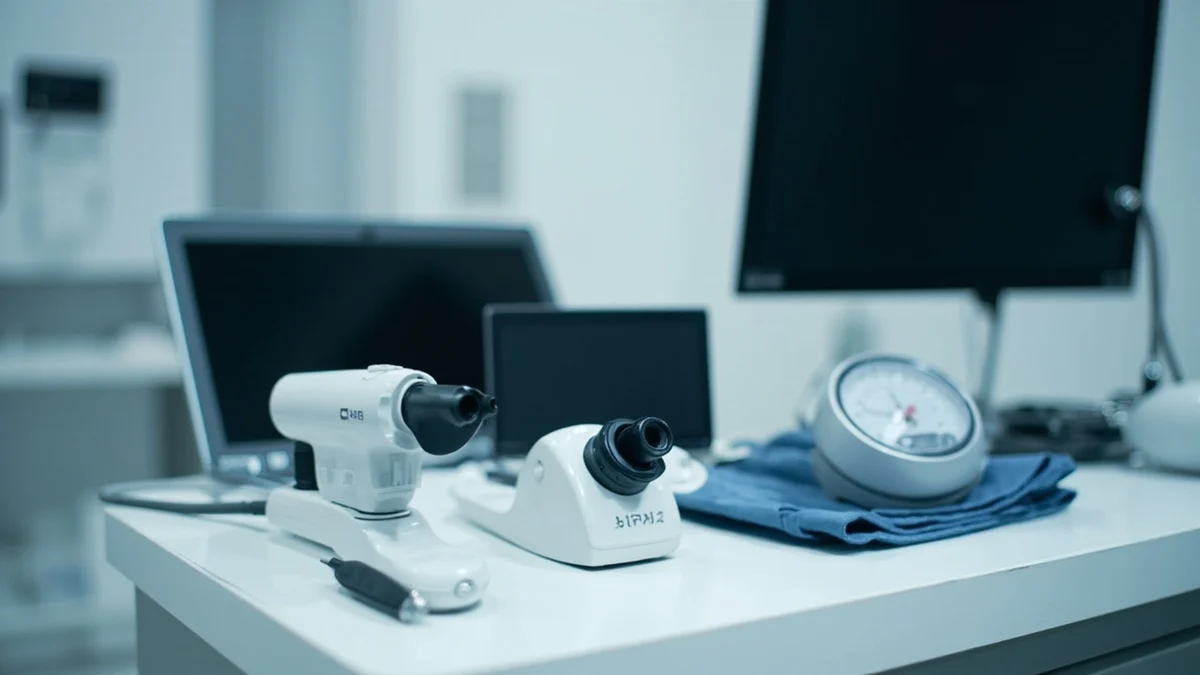
Procurement teams should specify a rolling-stand clinical vital signs spot-check monitor equipped with oscillometric Non-Invasive Blood Pressure (NIBP) validated to ISO 81060-2 (with wipeable antimicrobial adult, large-adult, and pediatric cuffs), a digital pulse oximeter probe engineered for low-perfusion and motion tolerance, and a rapid-response tympanic or non-contact clinical infrared thermometer calibrated to ASTM E1965 (±0.2°C accuracy). Pair the electronic monitor with a heavy-duty mercury-free shock-resistant aneroid sphygmomanometer for manual auscultatory verification in arrhythmic or hypertensive patients, alongside a die-cast aluminum beam or digital column scale with an integrated 60–210 cm telescopic stadiometer.
Licensing Inspection Tip (PHC / SHCC / IHRA MSDS)
Healthcare commission inspectors routinely verify calibration stickers on sphygmomanometers, thermometers, and weighing scales, along with mercury-elimination compliance. Always select mercury-free LED/aneroid blood pressure gauges and request factory calibration certificates upon delivery.
2. Zone 2: Consultation & Examination Room Ergonomics and Diagnostics
Inside the physician consultation and physical examination room, equipment reliability directly shapes clinical diagnostic confidence and patient perception of quality. The centerpiece is the examination couch: avoid lightweight tubular steel couches with thin foam that sag or wobble when elderly or bariatric patients transfer. Specify a powder-coated or stainless-steel frame rated to a minimum 200 kg dynamic safe working load, upholstered in seamless, flame-retardant, medical-grade PVC/PU leatherette that withstands quaternary ammonium and 70% isopropyl alcohol surface disinfection without cracking.
For EENT and physical diagnostics, wall-mounted diagnostic transformers with 3.5V LED fiber-optic otoscopes and coaxial ophthalmoscopes eliminate the recurring downtime of dead AA batteries and prevent instrument theft. LED illumination must deliver a Color Rendering Index (CRI) above 90 so erythema on the tympanic membrane or subtle retinal vascular changes are rendered accurately without warm halogen yellow distortion.
- Acoustic Stethoscopes (316L Stainless Chestpiece): Dual-head tunable diaphragm and open bell machined from solid stainless steel with dual-lumen PVC tubing for crisp S3/S4 gallop and murmur auscultation.
- Mobile LED Examination Gooseneck Lamp: Shadow-free 15,000 to 25,000 lux illumination at 30 cm working distance with a weighted 5-caster antistatic base and touchless or foot-switch dimmer.
- Neurological & Orthopedic Diagnostic Kit: Taylor/Buck reflex hammer with sensory needle/brush, 128 Hz (vibratory sense) and 512 Hz (Rinne/Weber auditory) aluminum tuning forks, and stainless tape measure.
3. Zone 3: Minor Procedure, Suturing & Outpatient Dressing Suite
Clinics performing abscess incision and drainage (I&D), laceration suturing, excisional skin biopsies, ingrown toenail avulsions, or foreign-body removals require a dedicated minor procedure room physically separated from general consultation areas. Flooring must be seamless vinyl or epoxy with coved skirting for wet-mop disinfection.
The procedure suite requires a minor surgical LED luminaire delivering at least 40,000 to 60,000 lux with a sterilizable handle and color temperature between 4,200K and 4,800K so arterial vs venous bleeding is unmistakably differentiated. An oil-free, maintenance-free piston surgical suction unit (minimum 20–25 L/min flow rate, twin 2-liter autoclavable polycarbonate jars with overflow float valves, and bacterial hydrophobicity filter) is essential for clearing blood and irrigation fluids. Stock a minimum of four pre-packed sterile AISI 420 minor surgery instrument cassettes so back-to-back procedures never stall waiting for an autoclave cycle.
4. Zone 4: Mandatory Emergency Resuscitation Trolley (Crash Cart)
Anaphylaxis following an intramuscular antibiotic injection, vasovagal syncope, acute bronchospasm, or sudden cardiac arrest can occur in any outpatient clinic. Both national healthcare commissions and international JCI Ambulatory Care standards mandate an immediately accessible, tamper-sealed Emergency Crash Cart.
The crash cart must house an Automated External Defibrillator (AED) or biphasic manual/AED defibrillator monitor with adult and pediatric pads, a 10-liter medical oxygen cylinder mounted on a stable trolley with a pin-index pressure regulator, Bourdon gauge, and bubble humidifier, self-inflating silicone resuscitation bags (Ambu bags in adult 1,600 mL and pediatric 500 mL sizes) with PEEP valves, Guedel oropharyngeal airways (sizes 00 to 5), an ISO 7376 fiber-optic Macintosh laryngoscope set with endotracheal tubes, a portable suction aspirator, and an audited emergency drug tray (epinephrine 1:1000, atropine, hydrocortisone, chlorpheniramine, salbutamol nebules, 50% dextrose, and IV cannulation sets).
5. Zone 5: Decontamination, Autoclave & Medical Waste Segregation
Even a compact 3-room outpatient clinic must establish a unidirectional "Dirty-to-Clean" instrument reprocessing counter. Soiled instruments enter the dirty zone (deep stainless sink, neutral enzymatic bath, and 40 kHz ultrasonic cleaner), move to the clean inspection and pouch-sealing bench, and enter an EN 13060 Class B pre-vacuum autoclave before storage in closed dust-free cabinets.
Under Hospital Waste Management Rules, every clinical room must also be equipped with color-coded foot-operated waste bins: Yellow for infectious waste and anatomical dressings, Red/Yellow puncture-proof boxes for sharps and needles, Blue/White for non-infectious general waste, and Green for biodegradable waste. In addition, clinics administering vaccines, insulin, biologics, or heat-labile emergency injections must install a dedicated pharmaceutical cold-chain refrigerator equipped with a 24/7 digital min/max data-logging thermometer and audio-visual excursion alarm locked between +2°C and +8°C—never storing patient biological specimens in the same compartment as injectable medications.
6. Standardizing Clinical Team Workwear & Phased Procurement
A cohesive visual identity across physicians, triage nurses, phlebotomists, and reception staff builds immediate patient trust during a new clinic launch. High-performing polyclinics color-code departments using breathable, antimicrobial scrub sets—for example, Navy Blue or Sky Blue for nursing and triage staff, Olive Green or Wine Burgundy for procedure room clinicians, and custom-embroidered Classic White Lab Coats for consulting physicians.
To avoid cash-flow bottlenecks during clinic construction, schedule biomedical deliveries in three waves: Wave 1 (30 days before opening) installs fixed cabinetry, examination couches, ceiling/wall diagnostic lights, and the Class B autoclave for water-conductivity and biological spore validation; Wave 2 (14 days before opening) commissions triage monitors, crash-cart defibrillators, and AISI 420 surgical instrument sets; Wave 3 (7 days before opening) stocks FEFO sterile consumables and distributes fitted clinician uniforms. Procurement officers can outfit their entire medical team in one consolidated order through ZeruvMed: explore /collections, review department options in /categories and /products (including the Women's Classic White Lab Coat, Men's Classic White Lab Coat, and Sky Blue Scrub Set), verify sizing in our /size-guide, and complete instant clinic checkout at /checkout.
Furthermore, outpatient facility planners should specify dedicated 16-amp hospital-grade grounded electrical sockets with surge suppression at every diagnostic couch and procedure trolley, maintain a minimum 1,200 mm clear corridor width for ambulance stretcher transfer, and document preventive maintenance service-level agreements (SLAs) for all biomedical serial numbers prior to regulatory licensing inspection.
By pairing ergonomic consultation layouts, calibrated ISO-certified diagnostic instrumentation, and a colour-coded infection-control zoning plan from day one, new outpatient clinics pass healthcare commission inspections on the first visit while projecting hospital-grade clinical authority to every patient.
Every diagnostic instrument, autoclave, and resuscitation monitor should also be entered into a digital biomedical asset register tracking serial numbers, warranty expirations, annual ISO calibration certificates, and preventive maintenance logs so clinical operations scale seamlessly as patient volume grows.
Conducting a mock emergency resuscitation drill and a full sterilization cycle audit with all clinical staff prior to opening day validates that every diagnostic zone, crash cart, and utility counter operates without friction.
Direct Storefront Integration
Recommended Clinical Workwear & Institutional Ordering
Standardize staff barrier protection and clinical uniforms alongside your biomedical equipment procurement.
Shop Clinical Collections
Equip your new clinic team with Women, Men, Lab Coats, and Premium designer edits.
All Storefront Categories
Compare clinical apparel categories by department role and fabric technology.
Browse All Products
View all scrub sets and customizable white lab coats for clinic commissioning.
Men's Classic White Lab Coat
Tailored twill consultation lab coat with embroidery support for clinic physicians.
Complete Clinic Order at Checkout
Direct B2B and individual clinic checkout with nationwide delivery across Pakistan.
Clinical Audit & Purchasing Q&A
Frequently Asked Questions
What is the total budget required to equip a new 2-exam-room outpatient clinic in 2026?
Equipping a compliant 2-examination-room outpatient clinic with a triage vitals station, minor procedure bay, Class B sterilization setup, emergency crash cart, and clinical staff uniforms typically requires PKR 1.85 million to PKR 3.40 million ($6,600 to $12,100), depending on whether you select mid-tier CE-certified diagnostic devices or hospital-grade modular telemetry.
Are mercury blood pressure monitors still allowed in newly licensed medical clinics?
Under the Minamata Convention on Mercury and updated national healthcare commission (PHC/SHCC/WHO) directives, mercury-containing sphygmomanometers and glass mercury thermometers are phased out due to neurotoxic spill hazards. Clinics must procure ISO 81060-2 validated shock-resistant aneroid, LED mercury-free column, or clinical oscillometric digital blood pressure monitors.
How many minor surgery instrument sets should a new outpatient clinic purchase?
A clinic performing minor procedures or wound suturing should stock a minimum of 4 to 6 identical sterile instrument sets (each containing a needle holder, Adson toothed forceps, mosquito hemostats, Iris/stitch scissors, and scalpel handle) so clinicians can treat multiple patients per shift before running an evening Class B autoclave batch.
What electrical backup is required for outpatient clinic medical equipment?
Critical diagnostic and procedure equipment—specifically the vaccine/medication refrigerator (2°C–8°C), minor procedure surgical light, suction machine, electrosurgical cautery, and patient monitors—must be wired to a pure sine-wave online UPS or solar/generator backup system to prevent waveform distortion and mid-procedure power loss.
How many sets of medical scrubs and lab coats should be ordered per staff member?
Infection control protocols recommend issuing 3 sets of clinical scrubs and 2 lab coats per full-time clinician (1 worn on shift, 1 in the laundry cycle, and 1 clean reserve in the locker) so soiled workwear is laundered daily at 60°C without staff ever re-wearing contaminated garments.
Continue Reading
Related Clinical Procurement Guides
Multiparameter Patient Monitors Buying Guide
Compare 3-parameter vital signs spot-check monitors, 5-parameter bedside ICU monitors, and modular OR anesthesia monitors across 5-lead ECG, motion-tolerant SpO2, IBP, and EtCO2 capnography.
Class B vs Class N vs Class S Autoclaves
Compare EN 13060 Class B fractionated pre-vacuum, Class S intermediate, and Class N gravity displacement autoclaves across hollow lumen penetration, Bowie-Dick testing, and 5-year clinic TCO.
Medical Consumables Bulk Procurement Guide
Step-by-step hospital supply chain blueprint: apply the ABC-VEN inventory matrix, FEFO lot tracking, par-level automation, and vendor consolidation to cut clinical consumables and workwear costs by 25%.