
Medical & Surgical Consumables Bulk Procurement: How Clinics Cut Supply Chain Costs by 25%
Step-by-step hospital supply chain blueprint: apply the ABC-VEN inventory matrix, FEFO lot tracking, par-level automation, and vendor consolidation to cut clinical consumables and workwear costs by 25%.
ZeruvMed Clinical Procurement Desk · Healthcare Supply Chain & B2B Institutional Desk
ISO 13485 · GS1 Healthcare UDI · WHO Medical Supply Chain Advisory · Published 2026-03-30 · Reviewed & Updated 2026-10-15
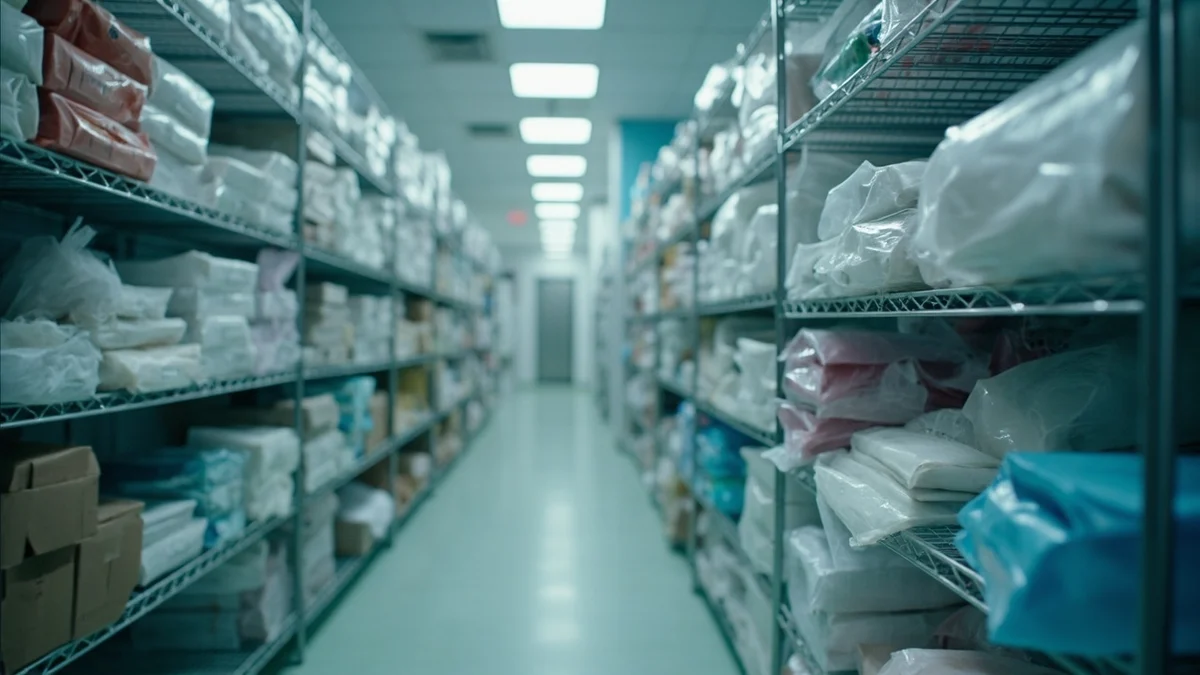
Executive Summary · Procurement Brief
Key Clinical & Commercial Takeaways
- 1Unstructured, reactive "spot buying" of surgical consumables, PPE, sterilization pouches, and clinical uniforms inflates outpatient clinic procurement spend by 22% to 34% through wholesaler markups, emergency courier surcharges, and expired-stock write-offs.
- 2Cross-tabulating ABC Spend Analysis (where Category A = 10%–20% of SKUs driving 70%–80% of annual PKR budget) with VEN Clinical Criticality (Vital, Essential, Non-Essential) focuses procurement negotiation on the 18–25 core SKUs that move the financial needle.
- 3Consolidating fragmented distributors into quarterly framework agreements with scheduled monthly call-off deliveries unlocks Tier-2/Tier-3 volume rebates (12%–18% off list) without tying up working capital or overflowing clinic storage rooms.
- 4Standardizing institutional clinician workwear (scrubs and embroidered lab coats) into annual department bulk orders reduces per-garment cost, eliminates mismatched retail colors, and guarantees 60°C laundry durability.
Side-by-Side Specification Matrix
Hospital & Polyclinic Inventory Optimization Matrix: ABC-VEN Cross-Classification & Procurement Rules
| ABC-VEN Matrix Class | Share of SKUs vs Annual Spend | Representative Clinical & Surgical Items | Inventory Buffer, Ordering Cadence & Negotiation Strategy |
|---|---|---|---|
| Class I: High-Impact / Vital (AV, AE, BV) | ~18% of SKUs · ~72% of Annual Spend | Surgical sutures, IV cannulas, nitrile exam/sterile gloves, Class B sterilization pouches, ESU pads, EtCO2/SpO2 sensors | Strict dual-vendor framework contract; bi-weekly/monthly par-level audit; 21-day safety stock buffer; executive price negotiation |
| Class II: Moderate-Impact / Essential (BE, CE, AN) | ~32% of SKUs · ~20% of Annual Spend | 3-ply/N95 masks, gauze swabs, syringes, Foley catheters, ultrasound gel, enzymatic detergents, institutional scrubs & lab coats | Automated Economic Order Quantity (EOQ) quarterly replenishment; 30-day safety buffer; volume tier bundling |
| Class III: Low-Impact / Routine (CN, BN) | ~50% of SKUs · ~8% of Annual Spend | Wooden tongue depressors, cotton rolls, paper couch rolls, non-sterile bandages, specimen cups, general stationery | Two-bin Kanban visual trigger; semi-annual bulk purchase; zero executive buyer time wasted on spot quotes |
| Spot-Buy Reactive Purchasing (Baseline Trap) | Ad-hoc WhatsApp/phone orders on stockout | Emergency cash purchases from retail pharmacies near the clinic | Results in +28% unit price premium, unverified lot provenance, and frequent mid-shift clinical stockouts |
| Annual Framework + Monthly Call-Off (Target) | 100% contracted SKU catalog | Locked 6- or 12-month B2B rate card with staggered monthly drops | Delivers 22%–27% net cost reduction, guaranteed FEFO >18-month expiry, and consolidated monthly invoicing |
1. Why Outpatient Clinics Overpay by 25%–35% on Medical Consumables
In private hospitals, diagnostic centers, dental chains, and multi-specialty polyclinics, medical and surgical consumables represent the second-largest operating expense after clinical payroll. Yet when our procurement desk audits outpatient facilities, we consistently find the same three sources of margin leakage: reactive spot purchasing (sending a runner to a local retail medical store when exam gloves or 3-0 sutures run out mid-week), brand fragmentation (stocking four different brands of IV cannulas or sterilization pouches across three procedure rooms), and silent expiry write-offs (boxes of absorbable sutures and chemical indicators expiring at the back of unindexed cupboards).
Transitioning from ad-hoc retail buying to a structured B2B institutional procurement framework does not require an enterprise ERP software suite. By implementing four foundational supply-chain disciplines—ABC-VEN categorization, Par-Level Min/Max formulas, Blanket Purchase Orders with staggered delivery, and FEFO lot rotation—even a 5-physician clinic can cut annual consumable and clinical apparel expenditure by 24% to 28% within 90 days.
You can apply the exact same institutional standardization to your clinical team's workwear today by exploring ZeruvMed's collections at /collections, reviewing department categories at /categories, and browsing all 21 garments at /products.
The blanket Purchase Order (Standing Call-Off) Advantage
Small clinics often avoid bulk pricing because they lack warehouse space or cash flow to buy 12 months of stock upfront. The solution is a Blanket Purchase Order: commit to an annual volume tier (e.g., 1,200 boxes of EN 455 nitrile gloves and 240 suture boxes) at the wholesale case rate, scheduled across 4 quarterly or 12 monthly deliveries billed upon dispatch.
2. Step 1: Deploying the ABC-VEN Matrix on Your Clinic Ledger
Export the past 6 or 12 months of clinic purchase invoices into a spreadsheet and calculate the total annual spend per SKU (Annual Usage Units × Unit Cost). Sort the table in descending order of PKR expenditure. You will immediately observe the Pareto distribution: Category A comprises roughly 15% of your item lines (typically nitrile examination gloves, sterile surgical gloves, synthetic sutures, Class B sterilization pouches, IV cannulas, and multiparameter sensor consumables) but consumes 70% to 75% of your entire budget. Category B covers the middle 30% of SKUs (20% of spend), and Category C covers the remaining 55% of low-cost items (only 5%–10% of spend).
Next, assign each SKU a clinical criticality rating with your lead physician or head nurse: V (Vital—stockout halts patient care or creates immediate life-safety risk, such as epinephrine, oxygen masks, sterile gloves, and crash-cart airways), E (Essential—stockout forces suboptimal workarounds), and N (Non-Essential—auxiliary comfort/utility items). Combining these produces the ABC-VEN Matrix, ensuring you never waste hours haggling over wooden tongue depressors (CN) while locking in competitive manufacturer-direct pricing and 21-day safety buffers on Class I (AV, AE, BV) items.
3. Step 2: Calculating Reorder Points (ROP), Safety Stock & Two-Bin Kanban
To eliminate both emergency stockouts and over-ordering, replace guesswork with the standard biomedical Reorder Point (ROP) formula for every Category A and B item:
Safety Stock = (Maximum Daily Usage × Maximum Vendor Lead Time in Days) − (Average Daily Usage × Average Vendor Lead Time in Days). Once Safety Stock is established, Reorder Point (ROP) = (Average Daily Usage × Average Lead Time in Days) + Safety Stock. For example, if a busy polyclinic uses an average of 4 boxes of medium EN 455 nitrile gloves per day (peaking at 6 boxes on procedure days) and the distributor takes 3 days on average (up to 5 days max) to deliver, Safety Stock is (6 × 5) − (4 × 3) = 18 boxes, and the Reorder Point is (4 × 3) + 18 = 30 boxes.
To make this effortless for nursing staff without barcode scanning every single glove box, use a physical Two-Bin Kanban system in the clean utility room: place the working stock in Bin 1 and place the exact Reorder Point quantity (30 boxes) in a sealed reserve Bin 2 with a laminated Reorder Card taped across the top. The moment a nurse opens Bin 2, the card is dropped into the procurement tray to trigger replenishment while 7+ days of buffer stock remain on the shelf.
4. Step 3: FEFO (First-Expired, First-Out) & Receiving Quality Control
Unlike retail consumer goods that follow FIFO (First-In, First-Out), medical consumables, sterile devices, sutures, and chemical indicators must strictly follow FEFO (First-Expired, First-Out)—because a distributor may ship a batch with a shorter remaining shelf life on a later invoice. Enforce three non-negotiable receiving rules at the clinic loading desk:
- Minimum 75% Remaining Shelf-Life Clause: Stipulate in every vendor purchase order that sterile consumables (sutures, IV cannulas, syringes, BI spore vials, chemical indicators) must arrive with at least 18 months (or ≥75% of total factory shelf life) remaining; reject short-dated stock at delivery.
- GS1 UDI, Lot Number & CE/DRAP Verification: Record manufacturer Lot/Batch numbers and expiry dates on the Goods Received Note (GRN) so any regulatory recall or defective lot can be traced to the exact clinic department within minutes.
- Climate-Controlled Clean Storage (18°C–25°C, <60% RH): Store paper sterilization pouches, hydrocolloid dressings, latex/nitrile gloves, and absorbable sutures off the floor on slotted racks away from direct sunlight and autoclave heat vents.
5. Step 4: Avoiding "False Economy" on High-Turnover Consumables
Cutting procurement spend by 25% must never come from substituting substandard, non-compliant consumables that double failure rates. For example, purchasing ultra-thin 2.5-mil industrial vinyl/nitrile gloves instead of EN 455 / ASTM D6319 medical examination gloves (AQL ≤ 1.5, minimum 3.5–4.0 mil finger thickness) results in 20% of gloves tearing during donning—forcing clinicians to double-glove and increasing actual consumption cost by 40%!
Similarly, buying 50 gsm non-compliant sterilization pouches instead of EN 868-5 70 gsm medical kraft pouches leads to wet packs and torn seals that force repeat Class B autoclave cycles. Always lock technical specifications (EN/ISO/ASTM/USP standard numbers) into the purchase order description so suppliers compete on margin and logistics efficiency rather than product downgrading.
6. Step 5: Consolidating Institutional Scrubs & Lab Coats with ZeruvMed
Clinical workwear is a prime example where institutional standardization yields immediate financial and brand dividends. When hospitals or clinics leave staff to buy uncoordinated retail scrubs, garments fade, shrink, or pill within 20 washes, and department identification suffers. By standardizing your facility on ZeruvMed's engineered FlexCotton, AeroDry, AntiMicrobial, and OdourBlock clinical collections—backed by our studio repair and re-stitch guarantee—clinics achieve a unified, authoritative clinical presence with multi-year garment longevity.
Outfit your medical, surgical, dental, and nursing departments today: browse our full catalog at /collections, compare department lines in /categories and /products (including the Women's Classic White Lab Coat, Men's Classic White Lab Coat, Zeruvmed LuxeFit Wrap Scrub Set, and Navy Blue Scrub Set), review our /care-guide and /size-guide, and complete your order directly at /checkout.
By pairing quarterly vendor scorecards (tracking on-time-in-full delivery rate >96%, zero short-expiry shipments, and invoice accuracy) with departmental consumption dashboards per 100 patient visits, clinic administrators transform medical procurement from a back-office cost center into a predictable, audit-proof clinical quality advantage.
Establishing clear technical specifications, Two-Bin Kanban reorder triggers, and standing framework agreements empowers clinical directors to reinvest that 25% supply-chain savings directly into diagnostic upgrades and staff clinical excellence.
Auditing your ABC-VEN inventory ledger every quarter ensures safety stock formulas adapt dynamically to seasonal clinical demand without tying up working capital in slow-moving stock.
Direct Storefront Integration
Recommended Clinical Workwear & Institutional Ordering
Standardize staff barrier protection and clinical uniforms alongside your biomedical equipment procurement.
Browse All Clinical Collections
Standardize your hospital or clinic team across Women, Men, Lab Coats, and Premium edits.
Department Categories
View all clinical apparel categories and department colorways.
Full Product Catalog
Explore all 21 precision-finished scrub sets and lab coats.
Zeruvmed LuxeFit Wrap Scrub Set
Designer wrap scrub set available in 10 custom clinical brochure colorways.
Institutional & Clinic Checkout
Complete bulk or individual clinic orders with card, bank transfer, or COD.
Clinical Audit & Purchasing Q&A
Frequently Asked Questions
What is the difference between ABC analysis and VEN analysis in hospital procurement?
ABC analysis ranks inventory purely by financial expenditure (Category A = top 70%–80% of annual spend; Category B = next 15%–20%; Category C = bottom 5%–10%), whereas VEN analysis ranks items by clinical criticality to patient survival (Vital, Essential, Non-Essential). Combining them into an ABC-VEN matrix prevents a clinic from running out of an inexpensive but life-saving Vital item (like a CV item—e.g., Guedel airway or epinephrine ampoule) while closely controlling high-spend AV items.
What AQL (Acceptable Quality Level) rating should clinics require when buying medical gloves in bulk?
Under EN 455-1 and ASTM D6319 / D3577 standards, sterile surgical gloves must meet an AQL of 0.65 or 1.0 for freedom from pinholes (water-tightness test), and non-sterile medical examination nitrile/latex gloves must meet an AQL of 1.5 or lower. Never procure AQL 4.0 industrial/food-service gloves for clinical patient contact.
How can a small outpatient clinic get bulk wholesale pricing without buying a full year of stock at once?
Use a 6-month or 12-month Blanket Purchase Agreement (Standing Order) with a primary medical distributor, or form a Group Purchasing Organization (GPO) syndicate with 3 to 5 neighboring non-competing clinics. You lock in the 10-case wholesale price tier based on committed annual volume, while the supplier delivers and invoices 1 to 2 cases per month.
Why is FEFO (First-Expired, First-Out) mandatory over FIFO in medical stores?
Medical consumables (such as absorbable sutures, chemical/biological indicators, IV catheters, and diagnostic test strips) carry strict regulatory expiration dates after which polymer hydrolysis, reagent degradation, or sterile-barrier breakdown invalidates safety. Because different distributor shipments may carry batches with earlier manufacturing dates, organizing shelves strictly by earliest expiration date (FEFO) reduces expired-stock write-offs by over 90%.
Does ZeruvMed support bulk clinic and hospital orders for scrubs and embroidered lab coats?
Yes. ZeruvMed supplies hospitals, outpatient polyclinics, dental practices, and diagnostic laboratories across Pakistan with department color-coded scrub sets (Women, Men, and Premium edits) and customizable Classic White Lab Coats (with name and institutional logo/crest embroidery). You can order directly via /collections and /checkout or contact our studio team via /contact for custom institutional runs.
Continue Reading
Related Clinical Procurement Guides

Disposable vs Reusable Surgical Instruments
Analyze the 5-year Total Cost of Ownership (TCO), CSSD reprocessing labor, surgical site infection (SSI) risk, and hybrid kit strategies for disposable vs reusable surgical instruments.
Medical Clinic Setup & Diagnostic Checklist
Complete 2026 room-by-room biomedical equipment, diagnostic instrumentation, crash cart, and clinical apparel checklist for launching a compliant outpatient medical clinic or polyclinic.

Sterilization Pouches & Class 1–6 Indicators
Complete clinical guide to ISO 11140-1 Chemical Indicators (Type 1 to Type 6), EN 868-5 medical peel pouches, biological spore testing (ISO 11138), and event-related sterile shelf life.